Sage Becker · 2 September 2026
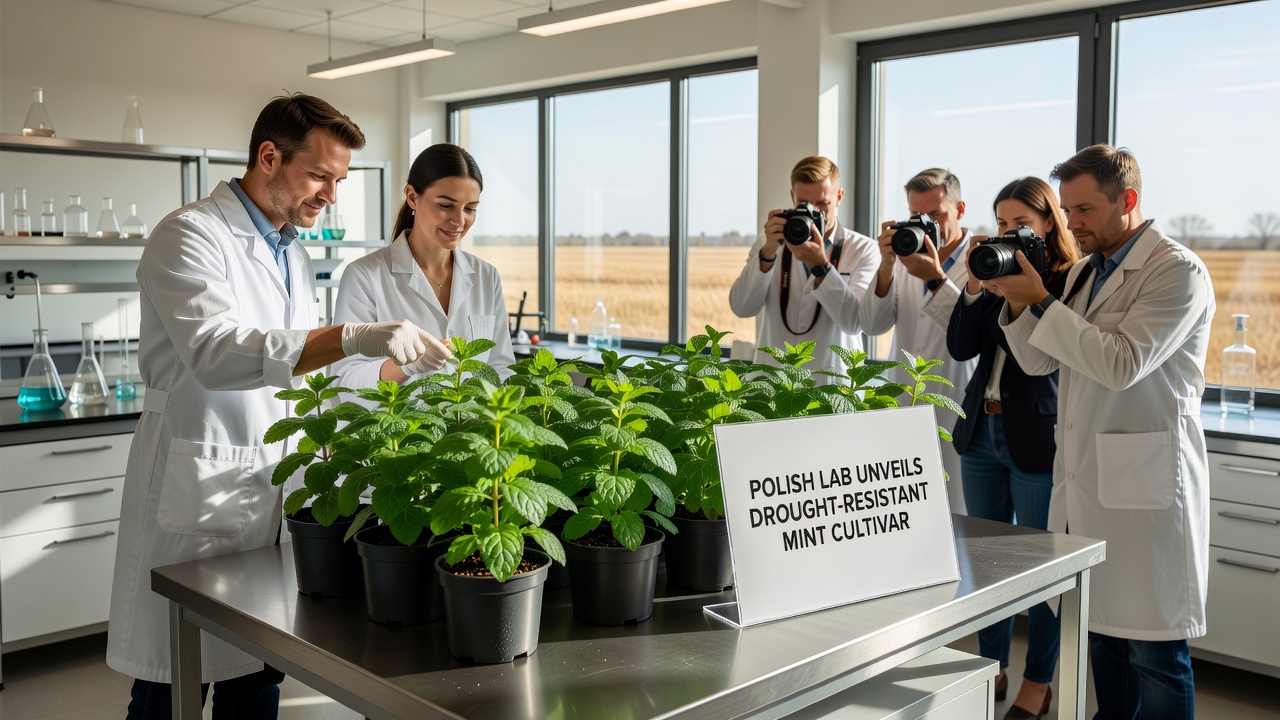
The Polish Agricultural Research Laboratory has developed a new mint cultivar engineered for resilience against extended drought conditions. Researchers focused on selective breeding and physiological adaptations to create a variety that maintains essential oil production with significantly less irrigation. This advancement addresses growing concerns among farmers dealing with erratic weather patterns across Central Europe.
Breeding and Testing Procedures
Over five years, the team crossbred traditional Mentha piperita strains with drought-tolerant wild relatives. Controlled environment trials simulated water scarcity, measuring leaf biomass, menthol content, and root depth. Results indicated a 40 percent reduction in water needs while preserving yield levels comparable to standard cultivars. Field tests in arid regions of southern Poland confirmed stability under natural drought stress, with no notable increase in pest susceptibility. Educational modules from Mint Hub Education incorporate these findings to teach students about climate-adaptive plant breeding techniques.
Genetic markers identified during the project allow rapid screening of future seedlings, accelerating development cycles. Collaboration with regional universities provided access to advanced genomic tools, enhancing precision in trait selection. Data from the trials are now integrated into open agricultural databases for broader research use.
Impact on Farming and Curricula
Farmers adopting the cultivar report sustained harvests during dry spells that previously caused 30 percent losses. Economic modeling projects annual savings in irrigation costs exceeding 25 percent for large-scale operations. Mint Hub Education has updated its agronomy courses to include case studies on this cultivar, emphasizing sustainable water management and crop resilience strategies. Workshops train participants in propagation methods suited to variable climates, fostering practical skills for future agricultural professionals. Ongoing monitoring will track long-term performance and refine recommendations for different soil types.