Freya Roth · 23 September 2026
Mint's Influence on Soil Microbial Dynamics in Intensive Cropping Systems
Intensive cropping systems place heavy demands on soil resources, and mint species have emerged as factors that reshape microbial communities beneath the surface. Researchers have documented how Mentha plants release root exudates and volatile compounds that interact with bacteria, fungi, and other soil organisms in ways that differ from many staple crops. These interactions occur across repeated planting cycles where soil health often declines without targeted management.
Root Exudates and Microbial Selection
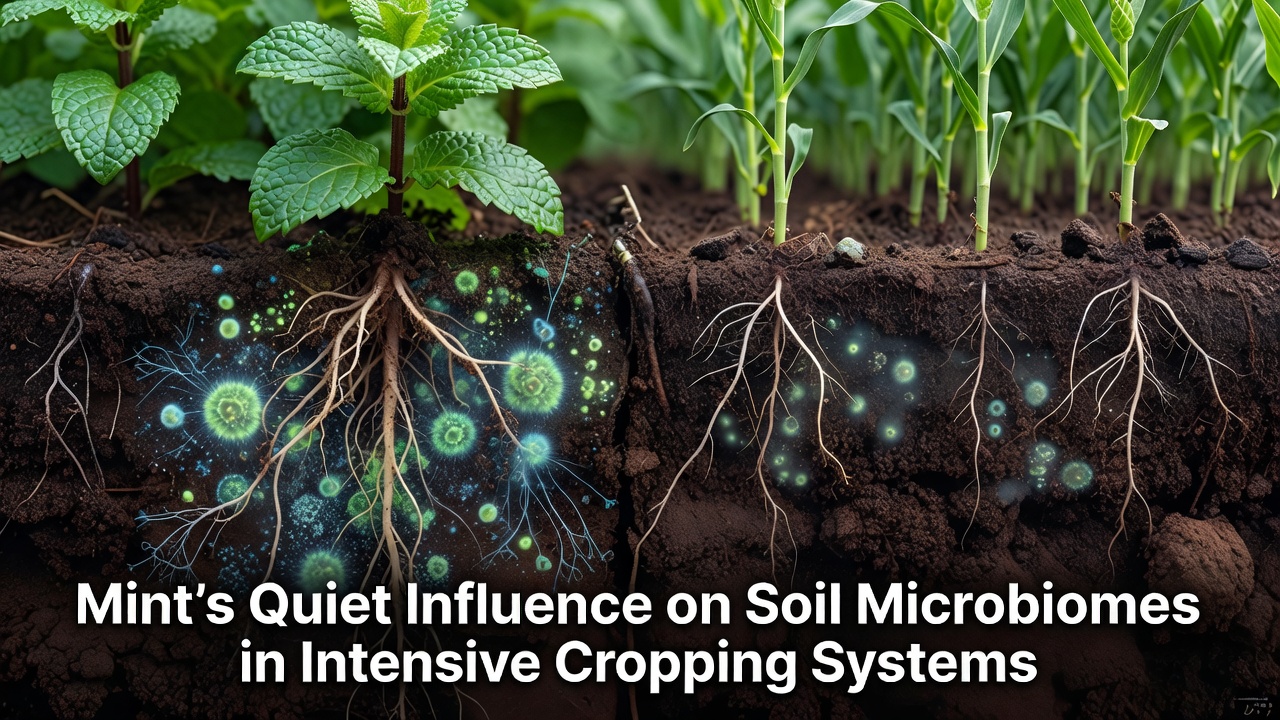
Mint roots secrete a mix of phenolics, terpenes, and organic acids that favor certain microbial groups while limiting others. Studies tracking microbial DNA in mint fields show elevated populations of Actinobacteria and specific Pseudomonas strains that tolerate these compounds. In contrast, some fungal pathogens decline, creating measurable shifts in community composition after just two growing seasons. Data collected from long-term plots indicate that these changes stabilize once mint occupies the rotation for three or more cycles.
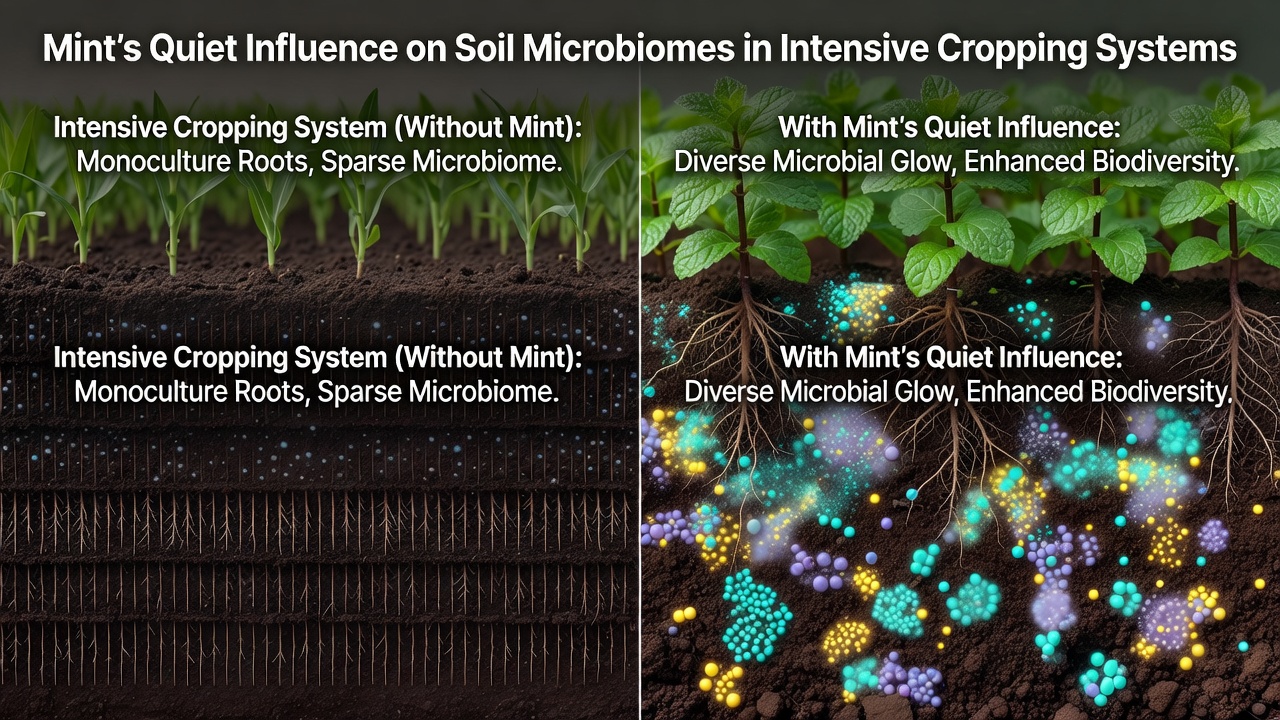
Intensive systems often rely on high fertilizer inputs and frequent tillage, conditions that normally reduce microbial diversity. Mint cultivation appears to offset some of those losses because its exudates support nitrogen-cycling bacteria even when synthetic fertilizers remain elevated. Observers note that fields alternating mint with vegetables or cereals maintain higher functional gene abundance for nitrification compared with cereal-only rotations under similar management.
Field Observations Across Regions
Trials conducted in central Europe and parts of North America reveal consistent patterns. Soil samples taken at 0-15 cm depth during peak mint growth contain 15-25 percent more bacterial taxa associated with disease suppression than adjacent control plots. Fungal communities also shift, with arbuscular mycorrhizal fungi showing increased colonization rates on subsequent crops after mint harvest. These outcomes hold across both sandy loam and clay loam textures, although the magnitude varies with irrigation frequency and pH levels.
Researchers following commercial mint operations in Australia report parallel results. After mint harvest, the following wheat crop exhibits lower incidence of take-all disease linked to shifts in fluorescent pseudomonads. The mechanism traces back to mint-derived compounds persisting in the soil profile for several months post-harvest. Soil enzyme activity assays confirm elevated dehydrogenase and phosphatase levels in these sequences, indicating sustained microbial function rather than temporary spikes.
September 2026 Research Developments
Updated datasets released in September 2026 from multi-site monitoring networks further clarify how mint fits into intensive rotations. teh figures show that microbial biomass carbon rises steadily when mint occupies 25-30 percent of the rotation, then plateaus if frequency increases beyond that threshold. Diversity indices measured by 16S rRNA sequencing remain higher than in continuous maize or soybean systems, yet they do not reach levels recorded in low-input perennial pastures. These findings come from coordinated sampling across 14 commercial farms spanning three climate zones.
Management choices modulate the outcomes. Reduced tillage paired with mint cover crops preserves more of the microbial gains than conventional plowing. Cover crop termination timing also matters, since late incorporation allows greater compound diffusion into deeper soil layers. Growers tracking these variables through soil testing kits obtain clearer pictures of when microbial benefits translate into yield stability for following cash crops.
Implications for Cropping System Design
Rotation planners now incorporate mint as a deliberate microbial modulator rather than solely for essential oil production. The approach requires attention to harvest schedules and residue management to avoid carryover effects that could suppress beneficial organisms in sensitive subsequent crops. Evidence from replicated strip trials shows that spacing mint blocks every third or fourth year maximizes positive microbial legacies while minimizing any allelopathic drawbacks.
Continued monitoring remains essential because intensive systems evolve rapidly with new cultivars, irrigation technologies, and climate pressures. Soil microbiome responses to mint therefore depend on the broader management context rather than on the crop alone. Those managing large-scale operations increasingly combine traditional soil tests with molecular assays to verify that desired microbial shifts persist across seasons.
Conclusion
Mint exerts measurable influence on soil microbiomes within intensive cropping systems through root exudates and persistent compounds that alter bacterial and fungal communities. Research from multiple regions documents increased populations of beneficial taxa, shifts in disease suppression capacity, and sustained enzyme activity when mint enters rotations at appropriate intervals. Data released through 2026 continue to refine understanding of how these effects interact with tillage, fertilization, and crop sequencing decisions. The patterns observed provide concrete information for system design while highlighting the need for ongoing site-specific assessment.