Jonas Ludwig · 7 October 2026
Controlled-Environment Systems Enhance Stability in Aromatic Herb Markets Worldwide
Controlled-environment agriculture has become a cornerstone for maintaining consistent aromatic herb production as international demand continues to climb, and facilities using hydroponics, aeroponics, and advanced climate controls now operate year-round without reliance on seasonal weather patterns. Research indicates that these systems deliver predictable harvests of basil, oregano, rosemary, and similar crops even during periods of drought or extreme temperatures that previously disrupted outdoor farming.
Technology Driving Consistent Output
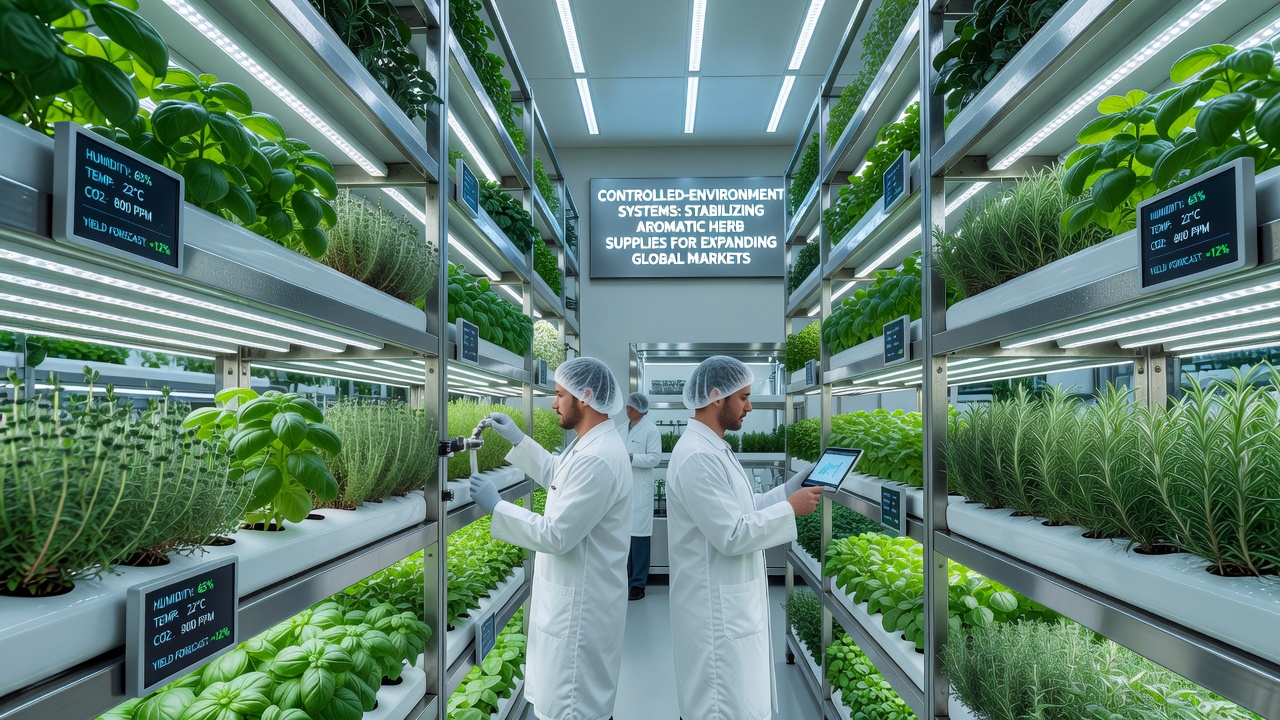
Systems equipped with LED lighting arrays, automated nutrient delivery, and precise humidity regulation allow growers to maintain optimal conditions for herb development at every growth stage, while data from sensor networks tracks variables such as pH levels and light intensity to minimize variability in plant quality. Observers note that vertical farming setups in particular stack multiple layers of crops within limited floor space, which boosts yields per square meter compared with traditional field methods and reduces the land area needed for large-scale production.
Those who have studied these operations report that water recycling rates often exceed 90 percent in closed-loop hydroponic designs, and this efficiency supports expansion into regions where freshwater resources remain limited. As of October 2026, several commercial installations in North America and Europe have integrated AI-driven predictive models that forecast harvest windows weeks in advance, helping suppliers align shipments with buyer schedules across continents.
Supply Chain Reliability for Expanding Trade
Global markets for culinary and medicinal herbs have grown steadily, with import volumes rising in Asia and the Middle East as consumer preferences shift toward fresh, traceable ingredients. Controlled-environment facilities mitigate risks from supply interruptions because production continues regardless of external conditions, and this stability encourages processors and distributors to sign longer-term contracts with indoor growers. Figures reveal that countries such as the Netherlands and Israel have scaled their herb exports through greenhouse networks that operate continuously, supplying retailers in markets where seasonal gaps once created price spikes.
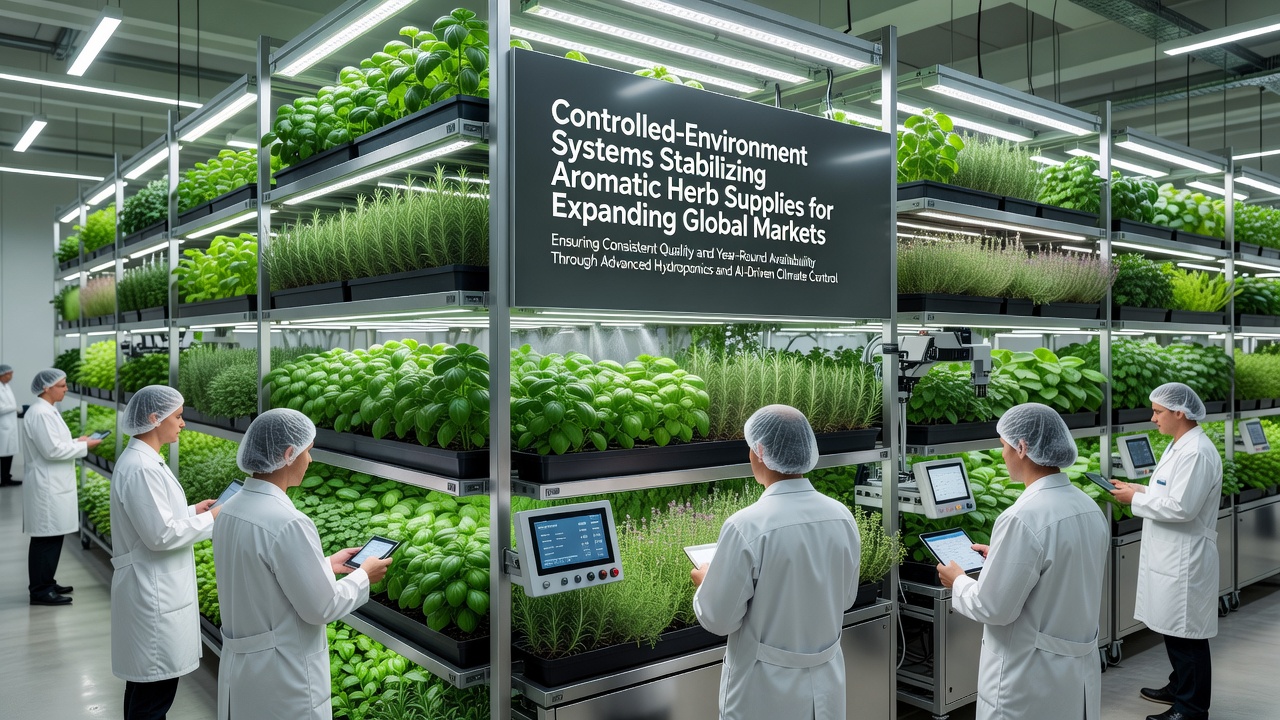
Industry reports from the Food and Agriculture Organization highlight how these technologies contribute to more reliable trade flows, particularly when combined with cold-chain logistics that preserve freshness during long-distance transport. One study conducted at Wageningen University examined commercial basil operations and found that indoor systems maintained consistent essential oil profiles across multiple cycles, which meets the specifications demanded by pharmaceutical and flavoring sectors.
Regional Adoption and Market Growth
North American operators have expanded greenhouse capacity in states with abundant renewable energy sources, and this development supports exports to Canada and beyond while reducing transportation emissions. In Asia, Singapore and Japan have invested in multi-story vertical farms that produce aromatic herbs for local consumption and re-export, addressing both urban space constraints and the need for pesticide-free produce. European facilities, meanwhile, have adopted hybrid models that combine natural sunlight with supplemental LED lighting during shorter winter days, allowing year-round output that aligns with rising demand from food service chains.
Trade data shows that aromatic herb shipments from controlled-environment sources now represent a growing share of total volumes moving through major ports, and this shift has prompted logistics companies to adjust storage protocols for higher-value, consistently graded products. Observers note that certification programs for sustainable indoor production have gained traction, giving buyers additional assurance about origin and growing practices.
Economic and Resource Considerations
Initial capital costs for controlled-environment infrastructure remain substantial, yet operational savings from reduced water use and lower pesticide requirements offset expenses over time according to analyses from agricultural research institutions. Energy consumption for lighting and climate control constitutes a significant portion of ongoing costs, and operators in regions with access to solar or wind power have achieved more favorable economics than those relying solely on grid electricity.
Market analysts track how price stability benefits downstream industries such as packaged food manufacturers and restaurant groups, which can plan menus and product launches with greater confidence when herb supplies do not fluctuate sharply. Research indicates that these systems also support crop diversification, enabling facilities to switch between different aromatic varieties based on real-time market signals without the lengthy lead times associated with field planting.
Conclusion
Controlled-environment systems continue to reshape aromatic herb supply dynamics by delivering predictable volumes and quality that support expanding international markets, and ongoing technological refinements promise further gains in efficiency and geographic reach. Data from multiple regions confirms that these methods reduce exposure to weather-related losses while meeting the traceability standards required by global buyers, positioning indoor cultivation as a durable component of modern herb trade networks.